
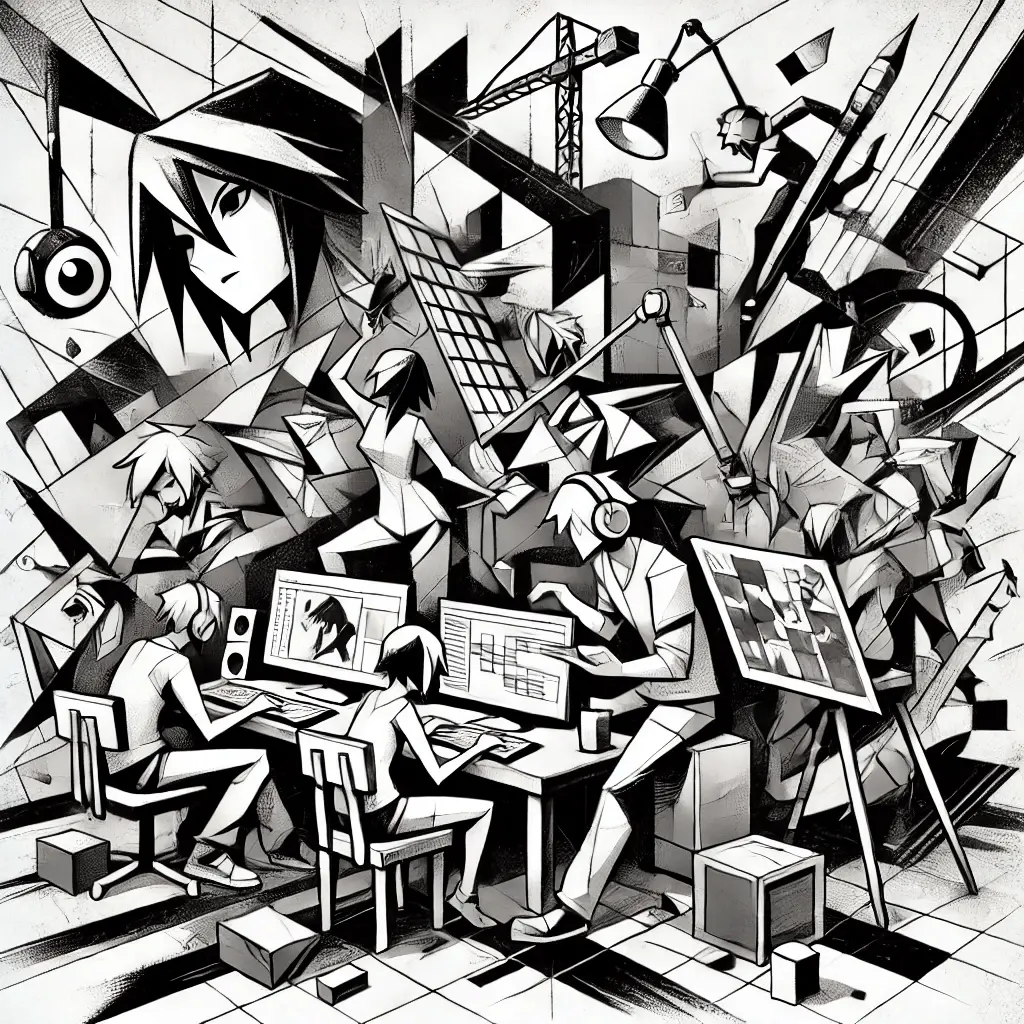
The first time I saw the blinding, seizure-inducing spectacle of a bullet-hell game, I knew, without a doubt, that anime had burrowed its way into indie gaming like a parasite with impeccable taste.
This wasn’t just a case of “inspiration.” No, this was full-blown artistic possession. Somewhere, a lone developer sat in a dimly lit room, fueled by ramen and a dangerous amount of caffeine, whispering to themselves: What if we made Neon Genesis Evangelion… but playable?
And thus, a new indie game was born.
We all know the usual suspects, Cyberpunk 2077 taking cues from Ghost in the Shell, or Final Fantasy VII borrowing the look of every mecha anime from the ’90s, but the true wild experiments are happening in the indie scene.
Something about anime’s insane, physics-defying action and hyper-stylized drama speaks directly to the souls of indie devs. Maybe it’s the fact that both mediums thrive on passion, low budgets, and an outright refusal to conform.
Look at Hollow Knight, a dark, atmospheric game dripping in Studio Ghibli-esque wonder. Or Hades, which took the frenetic, emotional weight of shōnen anime and cranked it up to god-level absurdity. Even cult favorites like Katana ZERO feel like they were ripped straight from a lost episode of Cowboy Bebop, soaked in neon and existential dread.
Anime isn’t afraid of going too far. Eyes the size of dinner plates? Sure. Hair colors that shift with the wind? Absolutely. And indie games have embraced that no-holds-barred approach with reckless abandon.
Think of indie games that abandon realism in favor of style, games like Persona 5, where the UI alone has more attitude than most protagonists, or No More Heroes, which takes the aesthetics of a mid-2000s anime opening and slaps it onto an ultraviolent fever dream.
The indie devs who embrace this aren’t just copying anime, they’re translating its philosophy of excess into something you can play. They’re harnessing the surreal, the exaggerated, and the emotional punch that anime delivers in twenty-minute episodes and turning it into interactive chaos.
Anime is a storytelling powerhouse because it knows how to play with tropes while breaking them at the same time. Indie games, meanwhile, don’t have the luxury of a 200-person writing staff or multimillion-dollar voice actors, so they borrow anime’s efficiency, delivering raw, emotional punches in bite-sized, devastating pieces.
Games like Undertale or OneShot could have been mid-tier anime series, ones that start out looking cute and end with you staring at the screen, questioning your entire existence. Then there’s Doki Doki Literature Club, which took the entire concept of “anime dating sim” and turned it into psychological warfare.
Indie games thrive on subversion, and anime has been laying the groundwork for decades. A scrappy dev doesn’t need Hollywood-level production values if they can weaponize emotional investment the way anime does.
Let’s be honest: if it’s not over-the-top, is it even anime?
Indie games have mastered the ridiculous, whether it’s the Bayonetta-style, air-combo insanity of Furi, the One Piece-level absurdity of Lethal League, or the Demon Slayer-meets-Ninja Gaiden vibes of Katana ZERO.
The key ingredient? Flow.
Anime fights aren’t just about cool moves, they’re about momentum, timing, and the visceral weight of every hit. The best anime-inspired indie games don’t just look flashy; they make every attack feel like it matters like it belongs in a climactic tournament arc where everything is on the line.
Anime and indie games have fused together like some kind of cursed alchemy experiment that went horribly, beautifully right. We’re past the point of casual “inspiration”, we’re in the middle of a full-scale creative takeover.
The next wave of anime-inspired indie games will likely get even weirder, leaning into experimental art styles, fourth-wall-breaking meta-narratives, and combat systems that defy human reflexes. It’s only going to get crazier from here, and honestly? That’s exactly how it should be.
If you’re an indie dev thinking about taking the plunge, don’t just borrow anime aesthetics, steal its soul. Take the relentless energy, the emotional highs, the hyper-stylized madness, and pour it into your game. Make something that feels like it belongs on a late-night anime binge, something that grips players by the throat and drags them into your world.
Because if anime has taught us anything, it’s that there are no limits—only the ones you’re afraid to break.
(And if you need proof, just watch what indie creators are cooking up at places like STUDIO INTI. The next great anime-inspired game might already be in the works!)
– PALADIN aka P.A.L.