
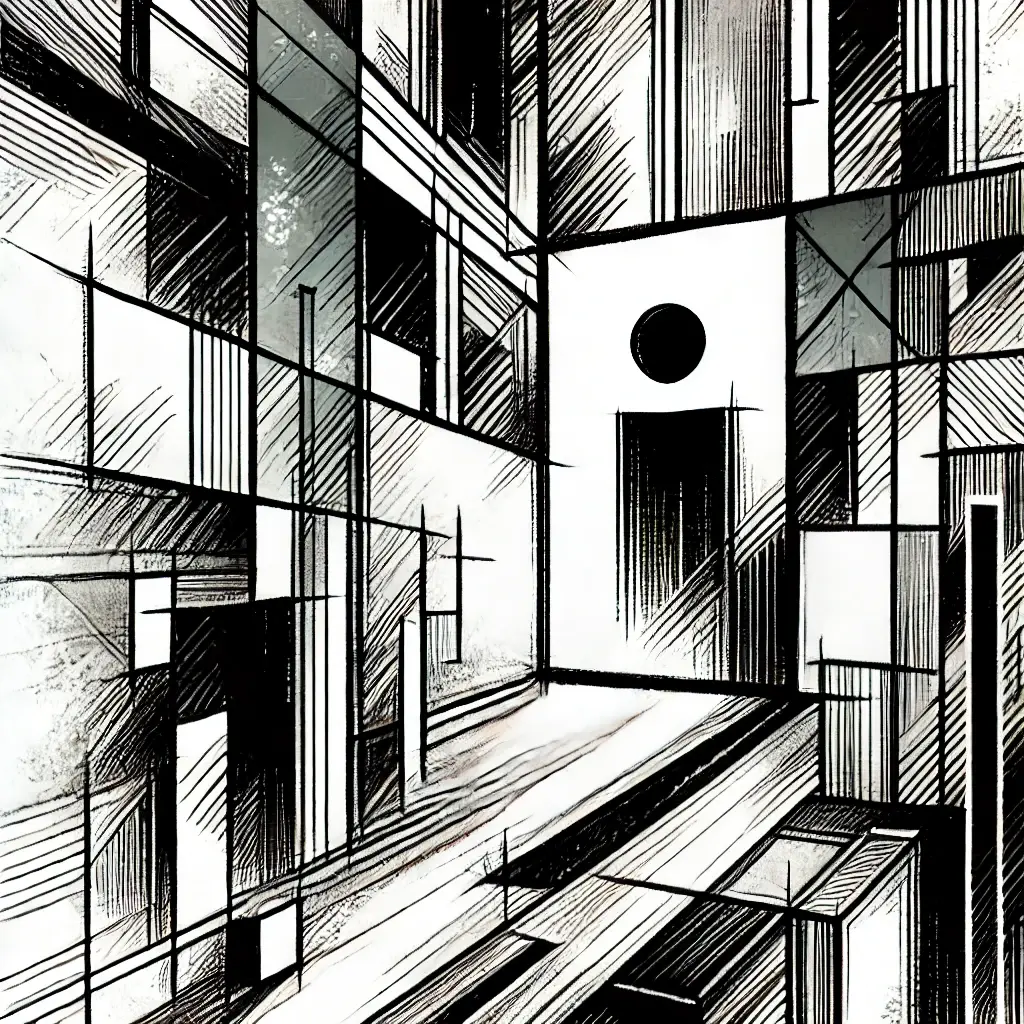
It’s a strange feeling to stare at a blank canvas and realize that less might truly be more. In an era where every pixel can scream for attention, where every comic panel feels like it’s auditioning for a blockbuster movie, there’s a quiet revolution happening: minimalism.
I stumbled into this world like a moth into a dimly lit room, unsure, curious, and slightly disoriented. Minimalist digital comics are a breed apart. They don’t shout, they whisper. And in that whisper, they somehow manage to tell stories louder than anything else on the page.
Most comics are a carnival, a riot of color, movement, and detail crammed into every square inch of the frame. But minimalist comics strip all that away, leaving behind only what’s necessary.
Negative space becomes a character in itself. A blank background isn’t an omission; it’s a pause, a breath. It lets the reader linger, reflect, and fill in the gaps with their own imagination. It’s an invitation to engage, not just consume.
If you’re skeptical, look at indie creators who are mastering this style. They’ve realized that sometimes a single line, a stark shadow, or a perfectly placed dot can carry more emotion than a thousand intricately detailed drawings.
Minimalism isn’t about being lazy or cutting corners, it’s about precision. Every line, every shade, every word has to earn its place. There’s no room for fluff.
This is where digital tools shine. The infinite flexibility of programs like Procreate, Clip Studio Paint, or even free apps like Krita allows creators to experiment, tweak, and refine their work until it’s razor-sharp. Minimalism forces you to focus not on what you can add, but on what you can subtract while still conveying the essence of the story.
The minimalist approach doesn’t just apply to visuals. It’s creeping into storytelling itself. Dialogue becomes sparse, captions concise. Some minimalist comics abandon words altogether, relying solely on images to guide the reader.
This isn’t about dumbing things down; it’s about trusting the audience. It’s about giving readers just enough to spark their imagination, then letting them do the rest. There’s a reason why some of the most powerful moments in comics, indie or otherwise, happen in silence.
This stripped-down aesthetic has found a natural home in digital comics. Scrolling through a vertical Webtoon with minimalist art feels like reading poetry on your phone, a meditative experience that stands out against the chaos of everyday life.
The indie space is leading the charge here. Without the constraints of traditional publishing, creators are free to experiment with minimalist storytelling. They’re creating comics that are intimate, introspective, and unapologetically personal.
Minimalism isn’t just a style, it’s a statement. It’s a rejection of the idea that bigger is always better, that more detail equals more value. In a world overwhelmed by noise, minimalist comics offer something rare: quiet.
And maybe that’s exactly what we need. Stories that slow us down, that make us pay attention to the small details, that remind us of the power of restraint.
If you’re an indie creator looking for inspiration, give minimalism a shot. Strip your story down to its bones and see what happens. It might be uncomfortable at first, but that’s where the magic is, in the raw, unpolished truth.
And who knows? Maybe one of those whispers will turn into a shout that echoes far beyond the page.
(STUDIO INTI. knows a thing or two about taking risks in storytelling, but this one’s on you. Grab your stylus, and start simplifying.)
– PALADIN aka P.A.L.